Getting people competent, confident and safe on complex equipment – as fast as possible, without cutting corners – is one of the most pressing challenges in equipment-heavy industries right now. The good news? VR-based equipment familiarisation is changing the game, with enterprises across mining, energy, manufacturing and logistics reporting 40-60% reductions in training time when they make the switch to immersive learning.
At Viewport XR, we build VR training experiences that mirror your real equipment, real sites and real procedures – so your teams reach full competency faster, and arrive there safer.
The race to competency is on
Time-to-competency is no longer just an HR metric. For mining, energy, utilities, manufacturing and logistics operators, it sits directly on the bottom line. It determines how quickly new hires, contractors and cross-skilled workers can perform critical tasks safely and independently on live equipment – and how much risk, downtime and cost you carry in the gap.
Industries are under more pressure than ever. Talent shortages, high contractor turnover, multi-site operations and tightening safety regulations have made slow, inconsistent training models a genuine liability. Leaders are looking for a smarter path from “new starter” to “reliable operator.”
What time-to-competency actually means
Time-to-competency is the period between someone joining a role and being able to perform it to the required standard – consistently, safely and with minimal supervision. It goes well beyond “hours sat in a classroom.” It answers the harder question: can this person operate, inspect, maintain and troubleshoot this equipment in the real world without creating incidents, downtime or rework?
Even a 20-40% reduction in that window has a compounding effect on productivity, safety performance and labour planning across a site or an entire organisation.
Why traditional equipment training can’t keep up
Most equipment familiarisation still relies on classroom sessions, thick manuals and on-the-job shadowing. The format is familiar – but the results are consistently slow and inconsistent. Here’s why:

Limited equipment access
Critical assets are often running, geographically remote or simply unsafe to put a learner on, so hands-on time is scarce before someone is expected to perform.

Built-in safety risk
Letting inexperienced staff learn directly on live equipment in mines, refineries and heavy manufacturing environments carries real incident risk.

High cost and logistics burden
Trainer availability, travel, equipment downtime and roster coordination make quality training expensive – and even harder for FIFO and remote workforces.

Inconsistent quality
Different trainers and different sites teach procedures differently. Traditional sign-offs rarely reveal how someone will actually perform under pressure.

Low engagement and poor retention
Slide decks and safety videos don’t build the muscle memory that hands-on roles demand. People pass inductions but still feel unprepared when they face the real thing.
The result? A long ramp-up where workers are technically “trained” but not yet truly competent.
How VR equipment familiarisation works
VR-based equipment familiarisation turns your critical assets, procedures and environments into interactive, immersive simulations your team can practice in safely – as many times as needed, with no risk to people or equipment.
Viewport XR builds digital twins and scenario-based VR modules that replicate your actual plants, vehicles, tools and workflows. Trainees put on a headset, step into a virtual version of their worksite, and work through real procedures using natural hand interactions and spatial cues.
A typical VR familiarisation session includes:

Guided runs
Learners are walked through every step with visual and audio prompts.

Unguided runs
They complete the sequence independently, from memory.

Scenario variations
Faults, alarms, environmental hazards and emergency conditions are introduced.

Instant feedback
Errors, missed steps and unsafe actions are flagged in real time.
Because the environment is virtual, your team can experience scenarios that would be impossible or too dangerous to stage on a real site – emergency shutdowns, equipment failures under load, confined space incidents. They make mistakes, learn from them and repeat until they’ve genuinely got it.
The evidence
40% faster competency is a conservative target
The numbers speak for themselves. Across industries, organisations that have adopted VR training consistently report dramatic reductions in time-to-competency.
Enterprise studies show VR-based onboarding reduces training time by 40–60% compared to classroom and e-learning methods, with higher confidence and knowledge recall. (1)
A warehouse operations program cut onboarding time by 55.7%, with participants rating VR as more engaging and effective than any previous training method. (2)
A medtech manufacturer moved equipment training into VR and reduced onboarding from 12 days to 3 – a 75% reduction – while also cutting post-training production defects. (3)
When you look at the broader body of evidence, a 40% reduction in time-to-competency isn’t a bold claim. For a well-designed VR program, it’s a conservative one.
VR in action
Industry scenarios
Because VR is content-driven rather than equipment-dependent, the same approach scales across sectors. Here’s what it looks like in practice.
Mining and resources
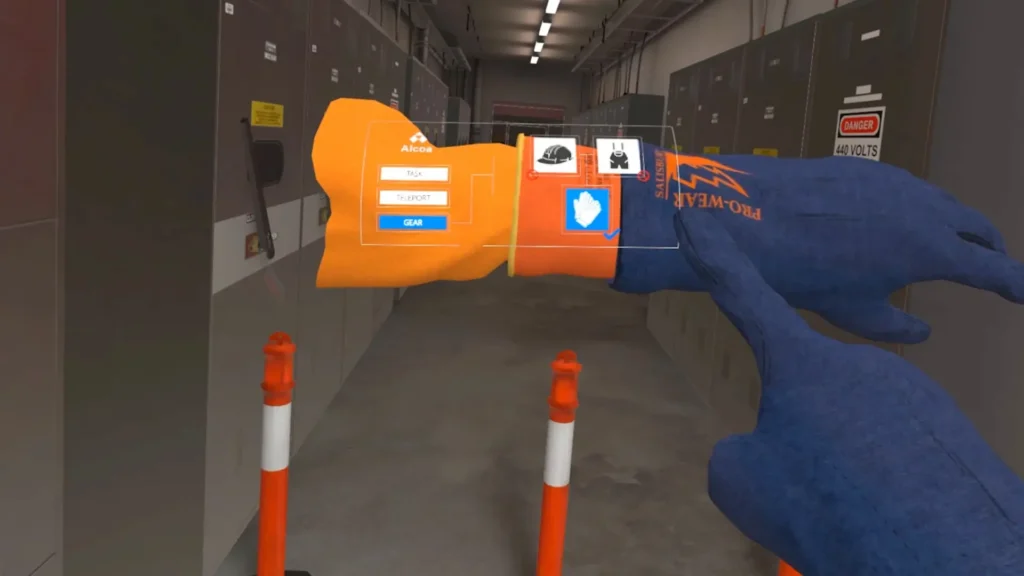
VR is already transforming induction and task training across Australia’s mining sector. Viewport XR has built digital twin VR experiences for Tier 1 mining clients including Alcoa and Woodside– simulating mining substations, hazard identification in operating environments, pre-start checks, lockout/tagout procedures and emergency responses.
New starters experience realistic site conditions and high-consequence decision points before they set foot on the ground. The result: faster ramp-up, stronger safety awareness and fewer costly early-tenure incidents.

Oil, gas and energy
For oil, gas and energy operators, VR can simulate valve operations, isolation sequences, confined space entries and plant start-up/shutdown procedures – in a controlled environment with zero risk to assets or personnel.
Trainees build procedural fluency by repeating critical paths and seeing the consequences of errors in simulation, long before they touch live equipment. Supervised field time becomes more productive because the baseline competency is already established.
Manufacturing, warehousing and logistics
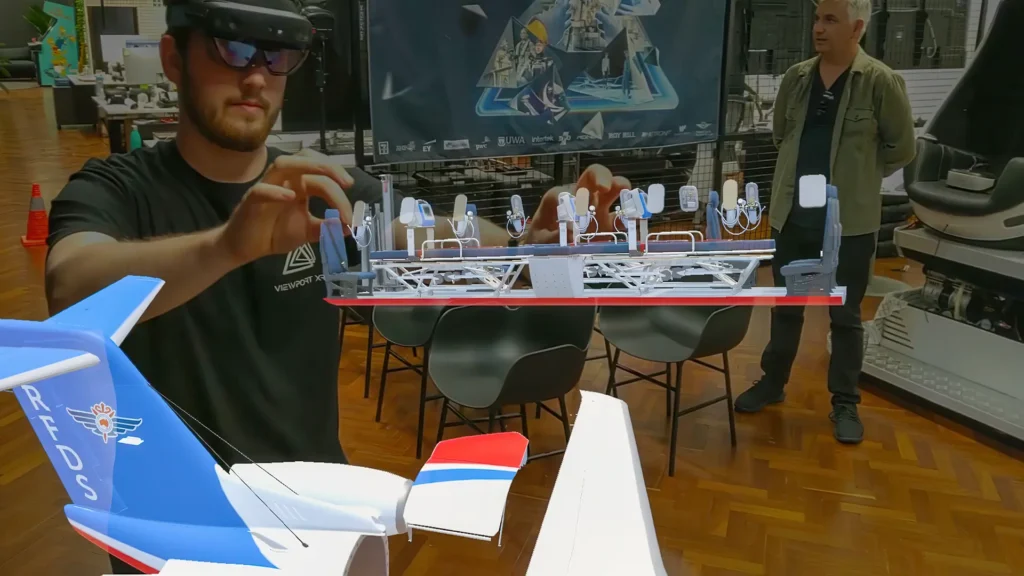
VR is helping manufacturers and logistics providers familiarise staff with new production lines, warehouse systems and safety procedures, often cutting onboarding times by 50% or more.
This is especially powerful in high-churn, seasonal or multi-site workforces, where the ability to onboard large numbers of people quickly – and consistently – is a genuine competitive advantage.
Healthcare and public services
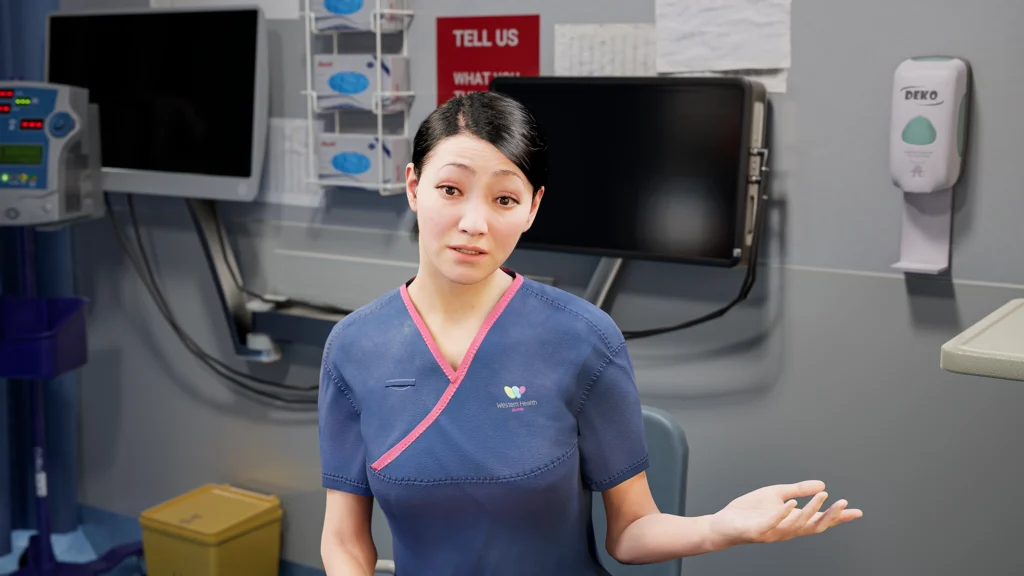
In healthcare, VR prepares staff for complex, emotionally demanding interactions in a psychologically safe space. Viewport XR has worked with healthcare providers including Western Health and Dementia Training Australia to build first-person VR experiences that build empathy, clinical readiness and procedural confidence – outcomes that traditional role-play or e-learning can’t match.
Why VR cuts time-to-competency
The mechanics
The speed gains aren’t accidental. VR accelerates competency development through several reinforcing mechanisms:

Unlimited safe practice
Learners repeat procedures until they reach genuine fluency, without consuming equipment time or creating safety exposure.

Standardised delivery
Every trainee experiences the same procedure steps, conditions and expectations, eliminating the variability that comes with different trainers and sites.

Richer scenario coverage
Rare fault conditions, edge cases and emergency scenarios can all be simulated, meaning teams are better prepared for what actually happens in the field.

Higher engagement and retention
Immersive, hands-on learning drives deeper recall than passive methods, reducing the need for repeated refreshers.

Always-on access
Standalone headsets can be deployed to depots, training centres and remote sites, so learning happens when rosters allow – not only when a trainer is free.
Together, these factors compress the time to reach a defined competency benchmark while simultaneously raising the quality of that competency.
Measuring what matters
To prove impact and build internal buy-in, time-to-competency needs to be measured with rigour – not just assumed.
VR makes this easier. Performance data is generated automatically with every session: completion times, error counts, unsafe actions, number of attempts to reach a benchmark, and decision quality under pressure. This gives L&D, HSE and operations leaders an objective, evidence-based view of workforce readiness.
Compare your VR-trained cohorts against traditional cohorts using these KPIs:
- Time to complete procedures unaided in VR, then on live equipment.
- Frequency and severity of errors in simulation versus in the field.
- Incident and near-miss rates post-training.
- Self-reported confidence and readiness before and after VR modules.
This data integrates with your existing LMS and HR systems, making it straightforward to demonstrate ROI to senior stakeholders and build the business case for broader rollout.
Getting started
Your path to 40% faster competency
Moving to VR-based training doesn’t require a massive transformation project. The fastest results come from a focused pilot: one high-impact piece of equipment, one critical procedure, a clear baseline measurement, and a commitment to comparing outcomes.
Viewport XR takes you from strategy to deployment. We work with your L&D, HSE and operations teams to identify the highest-value use cases, build immersive content around your real equipment and procedures, and integrate VR training seamlessly with your existing safety and learning frameworks.
From design and development through to deployment and ongoing support, our focus is singular: getting your people competent, confident and safe – sooner.
If a 40% or greater reduction in time-to-competency would make a material difference to your operations, safety record and bottom line over the next 12 months, let’s have that conversation.
Viewport XR is Australia’s leading immersive technology partner for VR training, safety and workforce development. Our clients include Alcoa, Woodside, Western Health and Dementia Training Australia.
Sources
- https://forwork.meta.com/au/blog/improve-business-efficiency-with-vr-training/
- https://virsabi.com/normal-cuts-onboarding-time-in-half-with-vr/
Academic validation:
pure.au.dk/portal/en/clippings/normal-cuts-onboarding-time-in-half-with-vr/ - https://mersus.io/pf/avatar-academy-cuts-medical-manufacturers-onboarding-time-by-75/