













Virtual Reality in Healthcare

Deployed across an 11,000-strong health workforce

Virtual reality (VR) and augmented reality (AR) are changing how healthcare teams learn, practise and communicate. Viewport XR builds custom immersive training, 3D medical visualisation and patient-focused experiences for hospitals, aged-care providers and health educators across Australia, designed around your people and your clinical reality.

VR Training for Occupational Violence and De-escalation

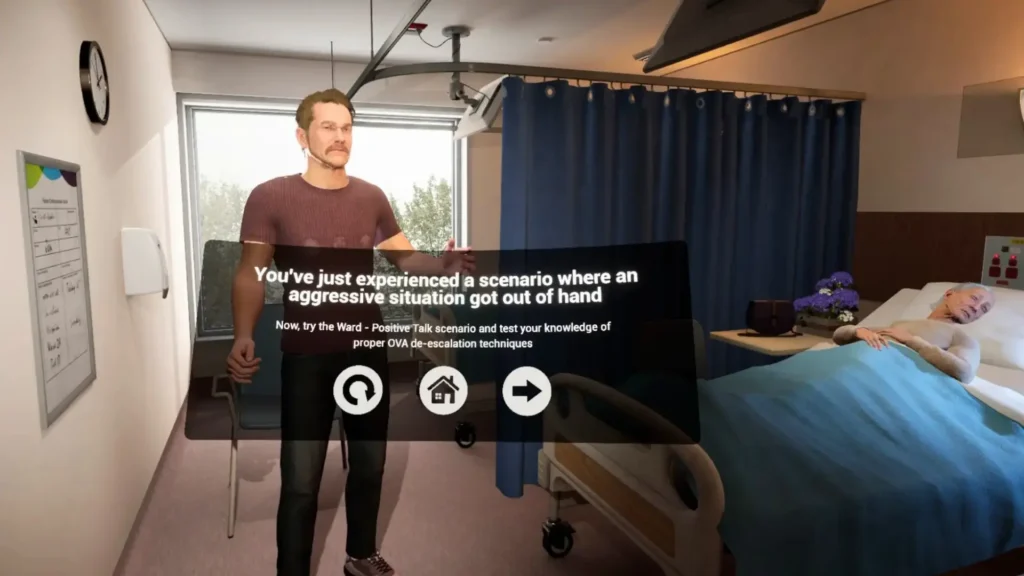
WorkSafe Victoria reports that up to 95% of healthcare workers have experienced verbal or physical assault at work. Staff often know de-escalation on paper. The hard part is applying it in the moment, when tone, posture and self-control matter more than recall. VR training lets them practise with interactive digital characters and branching conversations, in a safe space where mistakes become lessons, not incidents.

Case study

Western Health

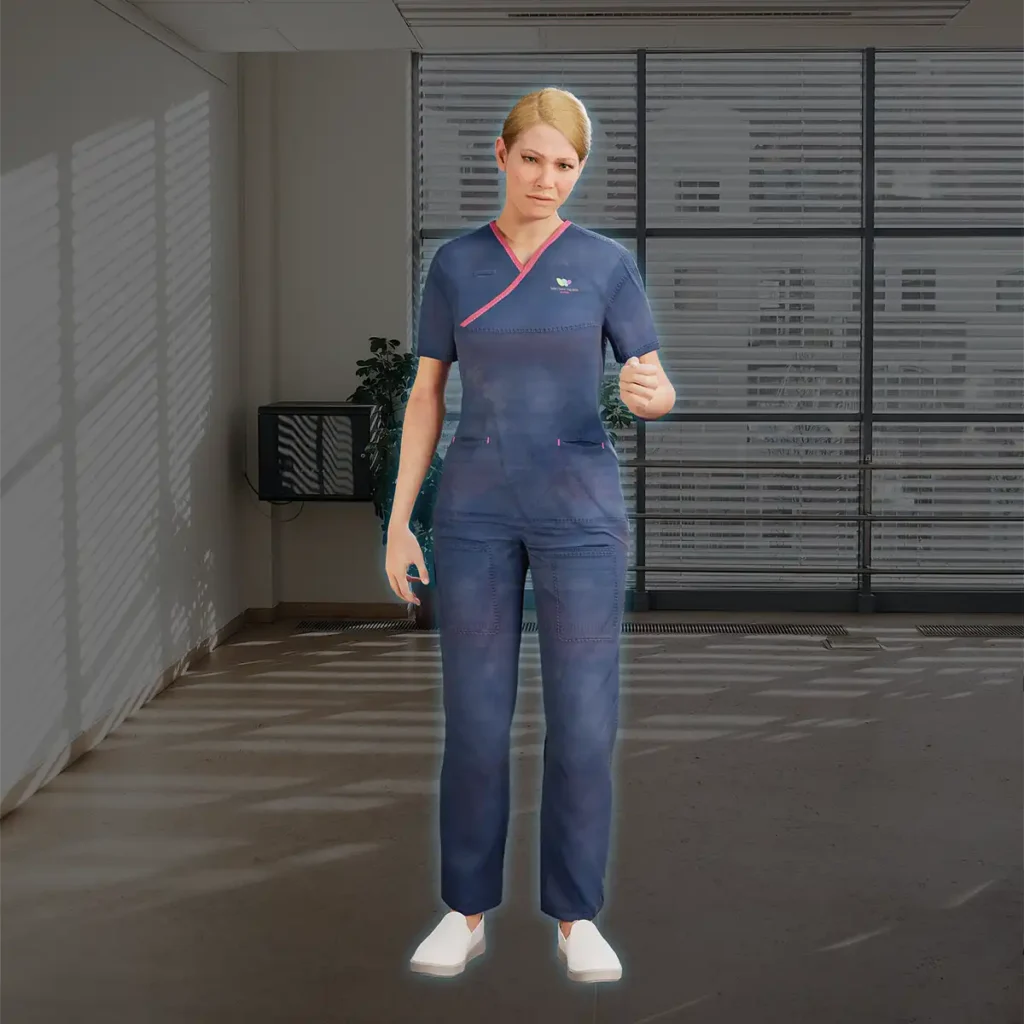
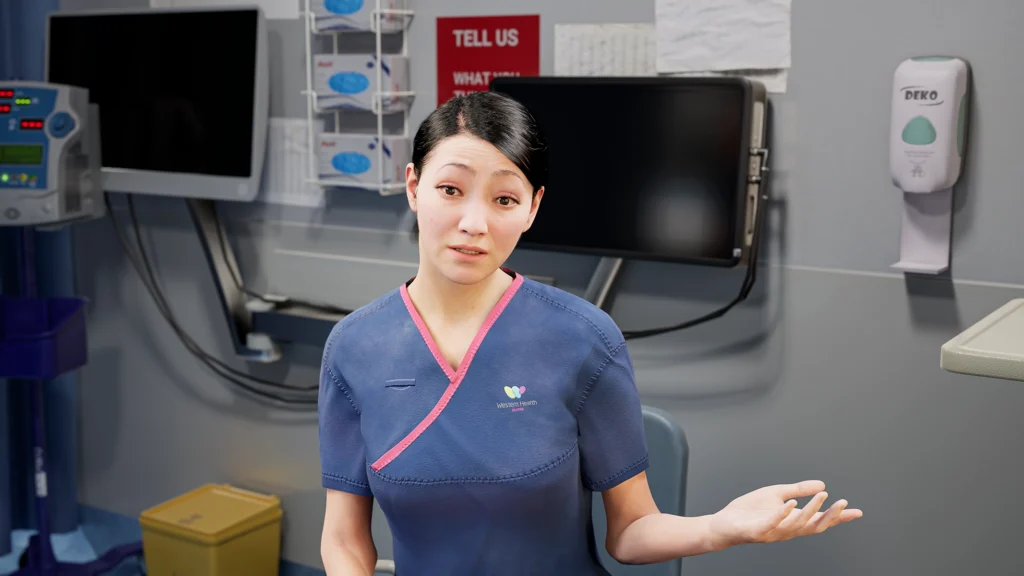
Western Health partnered with Viewport XR to build Reframe Your Response, a hyper-realistic VR simulator now deployed across its 11,000-strong workforce in four acute public hospitals and community health centres.

Trainees de-escalate an agitated hospital visitor who reacts to their tone and choices in real time, then experience the perspective of a patient having hallucinations. Built with Rokoko performance capture, customised MetaHuman digital humans and Unreal Engine, the characters show the micro-expressions that matter in a real escalation. Some trainees were moved to tears.

The training is faster, too. Staff who once needed days to work through the OVA curriculum can now move through key parts of it in minutes, and sessions are booked in flexible slots instead of full-day group workshops.

44%

Reframe Your Response contributed to a 44% reduction in work health and safety incidents, as reported by Western Health

41 FTE

Reduction in Additional Care Resources across 2023–24 and 2024–25, time returned to patient care

Award winner

Best Solution for Managing Psychosocial Hazards at the 32nd NSCA Foundation National Safety Awards of Excellence, October 2025

Independently evaluated

A Deakin University assessment led by Associate Professor Deb Kerr found statistically significant improvements in recognising early warning signs and applying de-escalation techniques

An incredible outcome and more than we could ever have imagined.”

Elisa Ilarda, OVA Operations Manager, Western Health

How Are VR and AR Transforming the Healthcare Industry?

VR lets healthcare teams rehearse situations before they happen. AR puts the right information in front of them while they work. Each suits different needs.

Virtual Reality (VR) in Healthcare

Virtual reality places users inside a fully digital environment, such as a realistic ward, a challenging patient interaction or a procedure to rehearse. It suits clinical training, patient interaction simulations, workforce development and anatomy learning.

Augmented Reality (AR) in Healthcare

Augmented reality layers digital content onto the real world through a headset, tablet or phone. Clinicians and students can explore 3D anatomy, follow step-by-step equipment guidance or see information exactly where they need it.

Empathy Training Through Virtual Reality

“Don’t judge someone until you’ve walked a mile in their shoes.” In healthcare, where patience and empathy shape the quality of care, VR makes that saying literal.

VR patient empathy training lets staff experience the world from a patient’s point of view: what they see, what they hear and how confusing or frightening it can feel. That understanding is hard to build from a textbook, and it changes how staff communicate, respond and design care.

Project

Meaningful Spaces for Dementia Training Australia

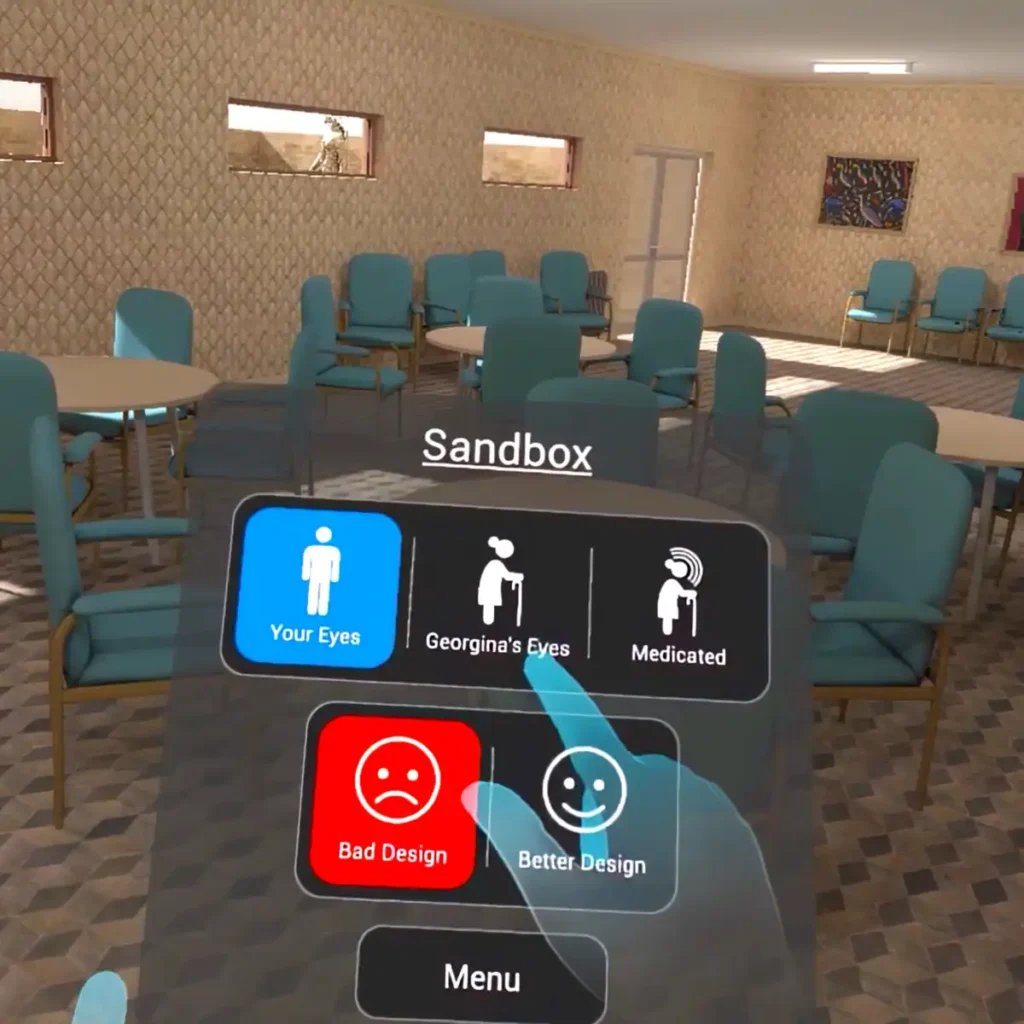
Dementia Training Australia, based at the University of Western Australia, engaged Viewport XR to show how physical spaces affect people living with dementia. We built Meaningful Spaces, a first-person, real-time simulation that places trainees in the eyes of Georgina, an 87-year-old woman who grew up in Fremantle, loves Corgis and lives with dementia.

Inside a virtual aged-care facility, users can instantly switch between good and poor interior design, between clear and impaired vision, and even see the effects of medications. A professional voice actor brought Georgina to life across thousands of recorded interactions, so trainees hear and feel her change as the environment changes.

“The Meaningful Spaces experience is profoundly emotive, and participants are more engaged in these workshops than with traditional classroom-type training events.”

Dr Andrew Stafford, Director, Dementia Training Australia

VR and AR for Medical Education and Anatomy Visualisation

The human body is complex, and flat diagrams only go so far. 3D anatomy visualisation in VR and AR turns it into something students and clinicians can explore: rotating organs, peeling back layers and watching how structures work together.

In VR, learners can step inside the body or rehearse a procedure with time to explore and without putting patients at risk. With AR, the same 3D models sit on a desk or in a classroom, so groups can learn together. It’s the same immersive learning approach we bring to education, applied to medicine.

Project

Ozurdex ocular implant visualisation

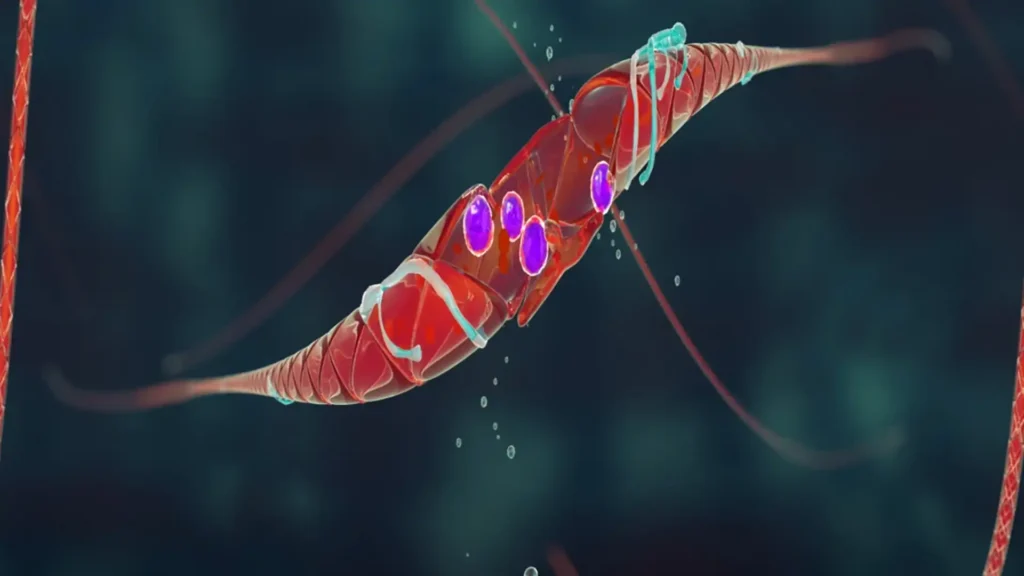
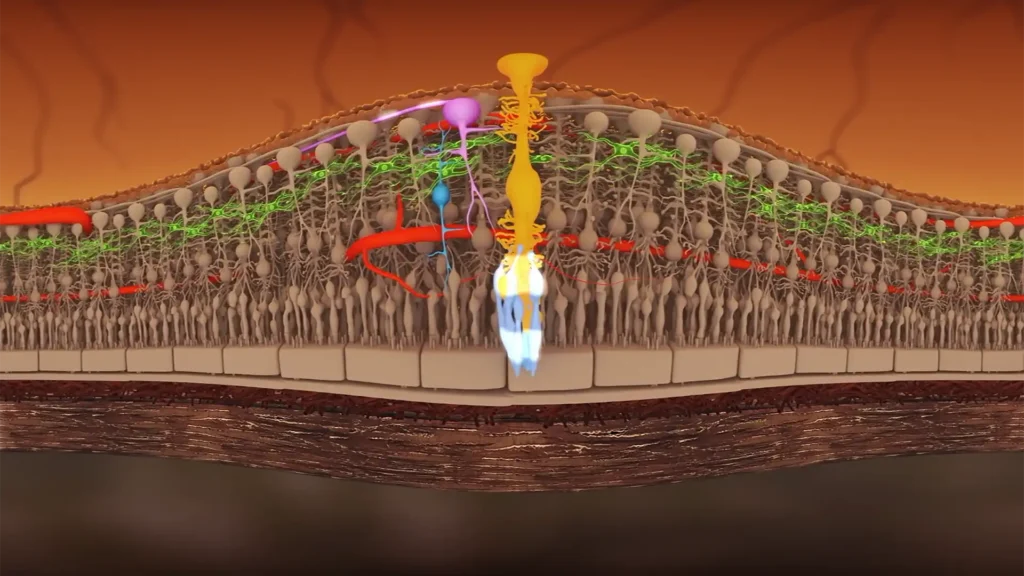
Ozurdex engaged Viewport XR to explain how its ocular implant works for people living with Diabetic Macular Oedema (DME). After extensive research and collaboration, we produced a computer-generated 360° video that walks viewers through the science of the eye and the implant’s function, helping patients and investors understand a complex treatment. See more of our medical animation and visualisation work.

Improving the Patient Experience With XR

Immersive technology can also make care easier to understand and less stressful for patients and their families.

Clearer consultations

Interactive 3D visuals and animations can help clinicians explain diagnoses, procedures and treatments.

Pain and anxiety management

Hospitals are using VR as a calming distraction during procedures such as wide-awake surgery.

Way Finding

Using a phone camera, digital overlays can be placed on the ground. Helping patients or family members find the right rooms.

Augmented Reality in Healthcare and VR Simulation

Applications We Build

Beyond our existing projects, Viewport XR can design and build immersive solutions for healthcare simulation training and AR medical training, tailored to your organisation.

Clinical and Nursing Simulation (VR)

Realistic patient interactions and decision-making scenarios that feel like a real shift, so nurses and clinicians build communication and clinical skills before they meet the real situation.

Emergency and Team-Based Training (VR)

Rehearse high-pressure emergency responses and coordinated teamwork together in a shared, simulated ward or emergency department.

Surgical Planning and Visualisation (AR)

Overlay medical imaging and 3D anatomy on headsets such as Meta Quest 3 to explore complex cases from every angle and plan the approach.

Medical Equipment Training (AR)

AR medical training overlays label components, highlight controls and guide users step by step, right on the equipment itself.

Rehabilitation and Therapy (AR)

Visual cues and interactive targets make selected rehabilitation exercises clearer and repetitive practice more engaging.

Custom VR and AR Healthcare Solutions by Viewport XR

No two healthcare organisations face the same challenge. Viewport XR designs and builds custom immersive experiences around your goals and your clinical environment, from digital humans and scenario-based VR training to medical education and enterprise deployment. Need it inside an existing system? We also offer custom app development.

Discover

Define the problem, the learners and what success looks like, with your clinical experts.

Build

Develop scenarios, characters and environments through clear milestones, with your team reviewing every stage.

Deploy

Kiosk-mode headsets put staff straight into training, with remote fleet management across sites.

Support

We keep content current and migrate to new hardware as your needs grow.

Testimonials

Frequently Asked Questions About Virtual Reality in Healthcare

Virtual reality in healthcare uses fully immersive digital environments to support medical education, workforce training, clinical simulation and selected patient applications. Staff can practise skills, experience patient perspectives and rehearse challenging situations as often as they need, without putting patients at risk.

Augmented reality in healthcare overlays digital information and 3D visualisations onto the real world. It supports anatomy education, medical equipment training, surgical planning and visual guidance during rehabilitation, using headsets, tablets or phones.

VR places the user inside a completely simulated environment, which suits immersive training and simulation. AR keeps the user in the real world and adds digital content on top, which suits equipment guidance, anatomy visualisation and hands-on learning.

VR medical training recreates patient interactions, clinical scenarios, workplace incidents and emergency situations in a realistic simulated environment. Trainees make decisions, see the consequences in real time and repeat scenarios until they’re confident, building practical skills before they face the real situation.

Yes. Scenario-based VR de-escalation training helps staff practise recognising warning signs, communicating calmly and managing escalating situations. At Western Health, Viewport XR’s Reframe Your Response program contributed to a reported 44% reduction in work health and safety incidents. Read the case study.

Cost depends on the number of scenarios, the realism of digital characters, the headsets and devices involved and how widely the program is deployed. After a short discovery session, Viewport XR provides a scoped proposal so you know exactly what’s included before you commit.

Timelines depend on scope and the number of scenarios. Viewport XR delivers through clear milestones (Kick Off, Pre-Alpha, Alpha, Beta and Launch), with your clinical team reviewing each stage, so you can see progress and shape the training as it’s built.

We choose hardware to suit each project. Western Health’s program launched on lightweight VIVE Focus 3 headsets with hand tracking, then moved to Meta Quest 3, with kiosk mode and remote fleet management for easy deployment across multiple sites.

Yes. Viewport XR develops custom VR and AR healthcare solutions around your organisation’s training, education and operational needs, from scenario design and digital humans to enterprise deployment and ongoing support. Book a demo to discuss your project.

Explore the Future of Healthcare With VR and AR

Whether you’re a hospital building a safer workforce, an aged-care provider deepening empathy or an educator bringing anatomy to life, immersive technology can help. Tell us your challenge, and we’ll show you what a custom VR or AR solution could look like for your team.

X
Privacy Overview

This website uses cookies so that we can provide you with the best user experience possible. Cookie information is stored in your browser and performs functions such as recognising you when you return to our website and helping our team to understand which sections of the website you find most interesting and useful.