







VR Remote Learning

Enhancing Education with Immersive Tech

VR remote learning uses virtual reality (VR) and 360-degree video to deliver training and educational content. This approach creates immersive experiences for students, regardless of their physical location. It transforms traditional remote education into an interactive, engaging environment, moving beyond standard video calls and static materials.

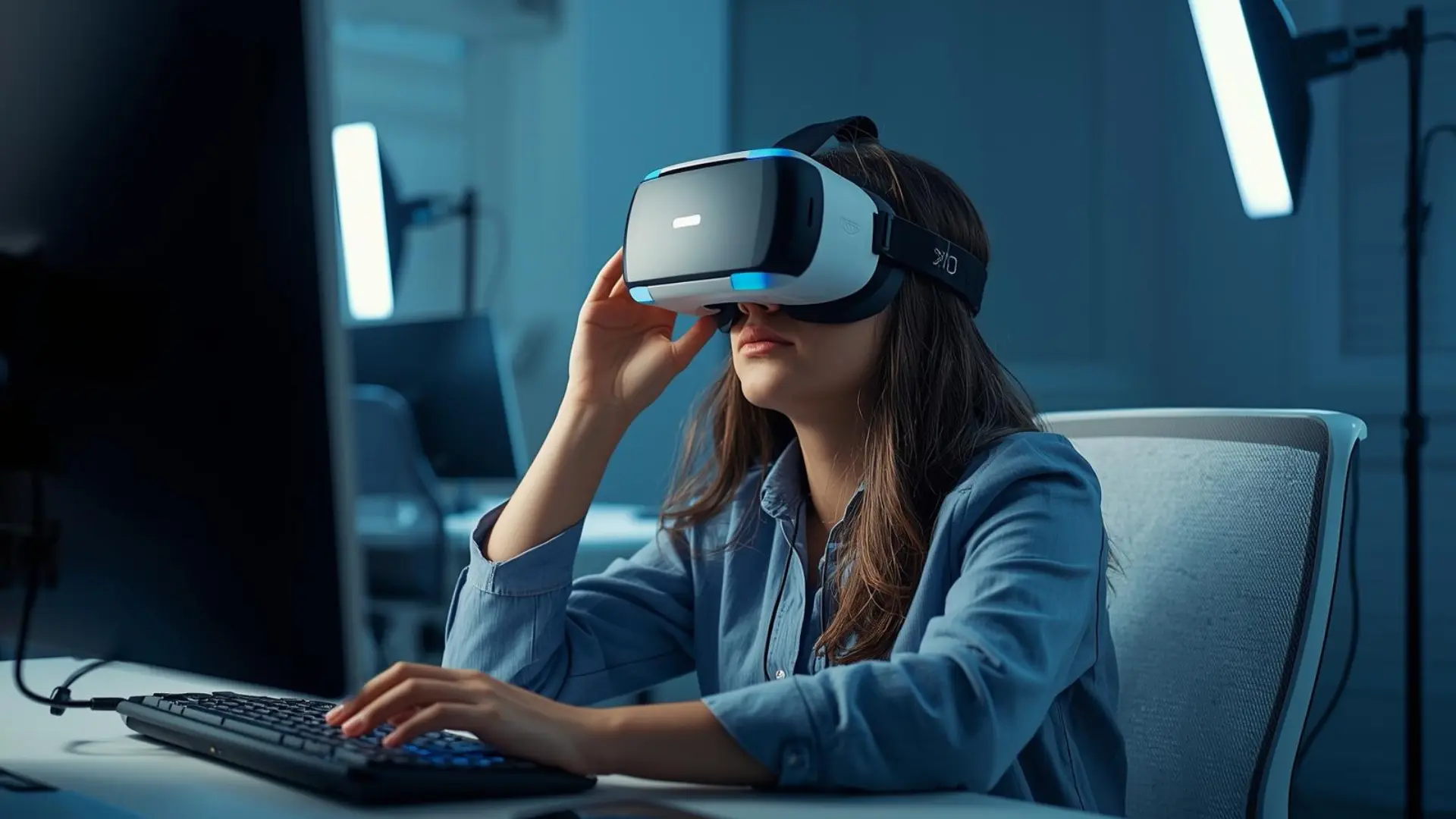
Student wearing a VR headset in a remote learning setup

Why Immersive Education Matters for Remote Learning

Traditional remote learning often struggles with student engagement and practical skill development. Immersive technologies like VR and 360-degree video offer a solution by providing rich, interactive environments. This can significantly improve how students grasp complex concepts and practice hands-on skills remotely.

For vocational training organizations (RTOs) and educational institutions, adopting these technologies means offering more effective and accessible learning pathways. It prepares students better for real-world scenarios.

How VR and 360-Degree Video Work in Education

VR remote learning leverages two primary technologies: full virtual reality and 360-degree video. Full VR creates entirely computer-generated environments where users can interact with virtual objects and scenarios. This allows for deep immersion and complex simulations.

360-degree video captures real-world environments with specialized cameras. Viewers can look in any direction, offering a sense of presence within a real location. Both methods enhance remote education by providing engaging, visual learning experiences.

Key Components of Immersive Remote Learning

Implementing immersive education involves several core elements:

VR Headsets

These devices provide the visual and auditory experience for full VR environments.

360-Degree Cameras

Used to capture real-world scenes for interactive video content.

Content Creation Tools

Software platforms for developing or adapting educational materials into VR or 360-degree formats.

Learning Management System (LMS) Integration

Connecting immersive content with existing educational platforms for seamless delivery and tracking.

Network Infrastructure

Reliable internet connectivity to stream high-quality immersive content to remote learners.

What Are the Benefits of Scalable Vocational Training?

Integrating VR and 360-degree video into vocational training offers substantial advantages. These technologies allow for training in high-risk or difficult-to-access environments without physical presence. This makes practical skills development more accessible and safer.

Research suggests that immersive learning can lead to improved learning outcomes and higher knowledge retention compared to traditional methods. A study published in Computers & Education found that VR learning enhanced performance and retention for students. Source

Applications in Vocational and Higher Education

Immersive technologies find diverse applications across educational sectors:

Virtual Campus Tours

Prospective students can explore facilities and campuses remotely, aiding recruitment.

Technical Skill Simulations

Learners can practice complex procedures in fields like engineering, healthcare, or trades. This includes scenarios that are expensive or dangerous to replicate physically. Studies on surgical training, for example, show VR can improve skill acquisition. Source

Field Trip Experiences

Students can virtually visit historical sites, natural wonders, or industrial facilities. This broadens their exposure without travel costs.

Soft Skill Development

VR can simulate customer service interactions or team collaboration scenarios, helping refine communication and problem-solving abilities.

Remote Equipment Training

Technicians can learn to operate and maintain machinery using interactive 3D models and guided simulations.

Safety Procedures

Trainees can experience hazardous situations and practice emergency responses in a controlled, safe virtual environment.

The Future of Immersive Education

The adoption of VR and 360-degree video for remote education is growing. These tools provide a robust framework for delivering engaging and effective learning experiences at scale. They address critical needs for practical, accessible, and high-quality education.

In practice, institutions are finding that these technologies can enhance student engagement and improve learning outcomes. The reality is that immersive learning offers a powerful addition to the educator’s toolkit, preparing learners for future challenges.

Key Takeaways

  • VR remote learning and 360-degree video deliver immersive educational experiences.
  • These technologies boost student engagement and improve knowledge retention.
  • They enable scalable vocational training, making practical skills accessible remotely.
  • Applications range from virtual campus tours to complex technical skill simulations.
  • Immersive education provides a powerful tool for modern learning environments.

To integrate immersive technology into your business solutions

Testimonials

X
Privacy Overview

This website uses cookies so that we can provide you with the best user experience possible. Cookie information is stored in your browser and performs functions such as recognising you when you return to our website and helping our team to understand which sections of the website you find most interesting and useful.